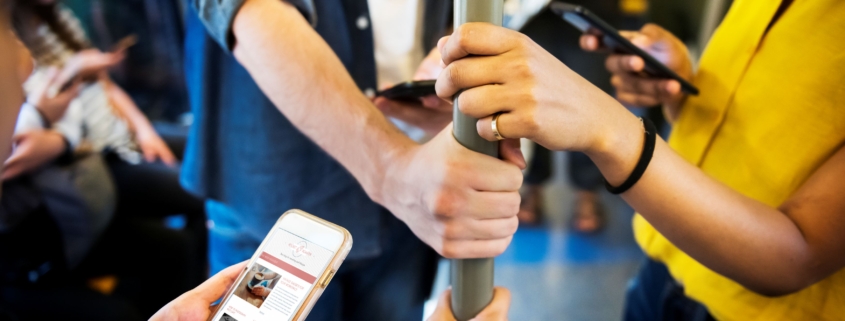
The way people access and consume news is constantly evolving, partly due to the development of digital technology. A report published by the IDN Research Institute in 2025 states that 47% of the audience consumes news via social media. This marks a shift in the role of conventional media, as audiences are beginning to rely on digital platforms to meet their daily information needs.
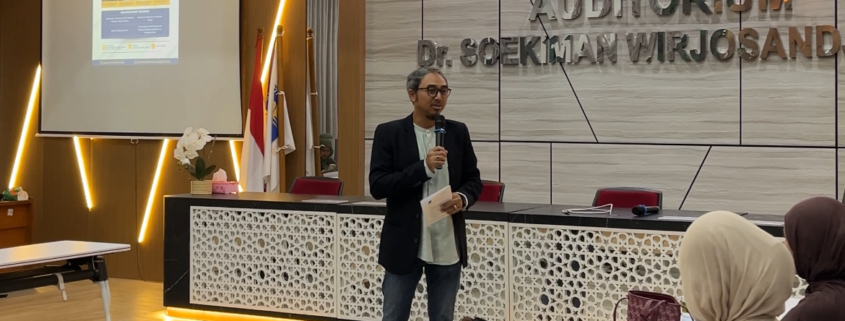
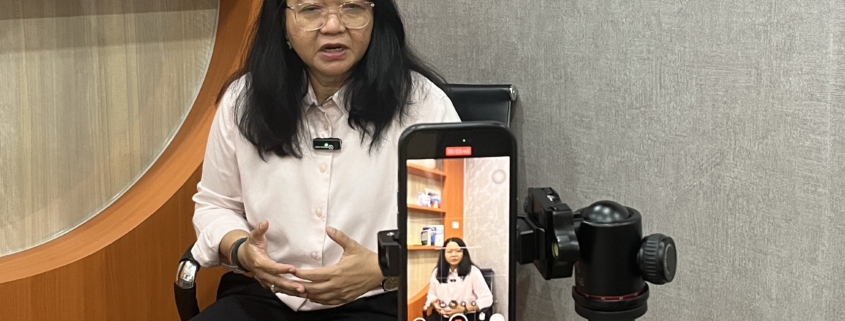
In the “What Professors Think” interview session with Prof. Nurhaya Muchtar from Indiana University of Pennsylvania, she explained this through two perspectives: positive and negative. On the positive side, the significant use of social media is a sign that the public is becoming increasingly information-literate; they understand the importance of news and information.
With adequate internet connectivity, the public remains connected to current events, wherever and whenever. “This change is unavoidable because it’s so convenient everyone has a mobile phone, everyone has access to social media,” she stated.
Meanwhile, from a negative perspective, Prof. Nurhaya Muchtar emphasised that the digital space carries complex risks, particularly regarding disinformation. On social media, information spreads unchecked or rapidly without verification. Consequently, this leads to fake news and deepfake content that is difficult to identify. This situation highlights that the speed of digital communication outweighs the accuracy of information.
“The downside is that people take everything online as true because there is so much fake news and so many deepfakes being circulated,” she explained.
Another issue is that audiences often fail to pay attention to the original source. Social media can indeed serve as an effective channel for journalism if users consistently verify information from credible sources or institutions. “As long as they check the sources, even if they find the information on social media, that’s fine,” said Prof. Nurhaya Muchtar.
Unfortunately, problems arise when someone consumes information and shares it without checking the source’s credibility. Not all audiences pay attention to verification markers such as the blue tick on social media. According to her, audience trust is influenced by personal relationships or social networks. For example, content or news shared by friends, family members, or figures they already trust.
“One of the factors that makes people trust social media is if they see the story was shared by their own friend, their own circle,” she noted.
Credibility in the digital age is shaped by social validation rather than institutional authority. “Whoever sent it to them via social media makes them believe it’s worth sharing and that it might be correct,” she emphasised.
Overall, the digital age has transformed the role of the media, not only acting as a gatekeeper of information but also turning the audience into a participatory information ecosystem. Consequently, improving media literacy and critical thinking are key skills, so that the audience can identify disinformation and deepfakes.