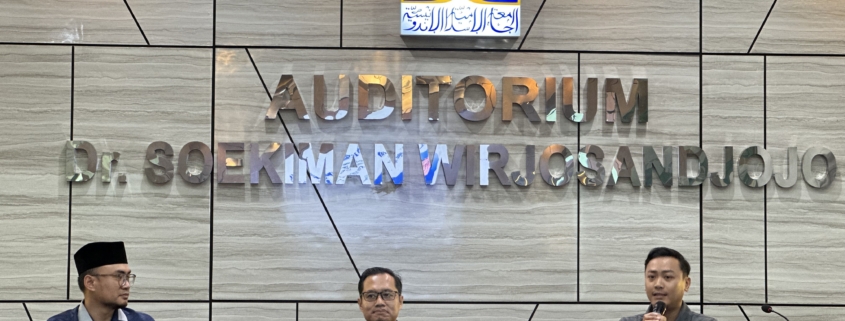
The International Program of Communication (IPC) Universitas Islam Indonesia (UII) held the Academic Skills Study (ACSS) Orientation 2026 on Friday, 2 October, at the third-floor Auditorium of the Soekiman Wirjosandjojo Building, UII. Carrying the theme “Led the Way, Thrive Every Day: Building Character and Nurturing Connection in IPC,” the program introduced new students to academic life while encouraging them to develop personal skills, explore opportunities, and build connections within the IPC community.
The orientation was attended by new IPC students and featured speakers from different backgrounds, including Dr. rer. nat. Dian Sari Utami, S.Psi., M.A. from the Department of Psychology, Faculty of Psychology UII, Ida Nuraini Dewi Kodrat Ningsih, S.I.Kom., M.A. from the Department of Communication, Faculty of Social and Cultural Sciences UII, and Nandita Faiza, S.I.Kom., an alumna of the UII International Program of Communication.
The event began with remarks from the Head of the Department of Communication, Dr. Zaki Habibi, S.IP., M.Comms. In his opening remarks, Zaki welcomed the new students and highlighted the importance of seeing university not simply as a series of classes and assignments, but as a journey of personal development.
He explained that ACSS was designed to help students understand the bigger picture of their university journey. According to him, students would face lectures, assignments, examinations, and various academic requirements throughout their three- to four-year study period. However, seeing these activities only as repetitive obligations could make the university experience difficult to enjoy.
Instead, students were encouraged to see their undergraduate years as a “forming age,” a period in which they could shape themselves through academic and non-academic experiences.
“The one who can form it is you yourself,” Zaki said during the session. He encouraged students to explore different activities, meet new people, and use their time at university to develop a better version of themselves.
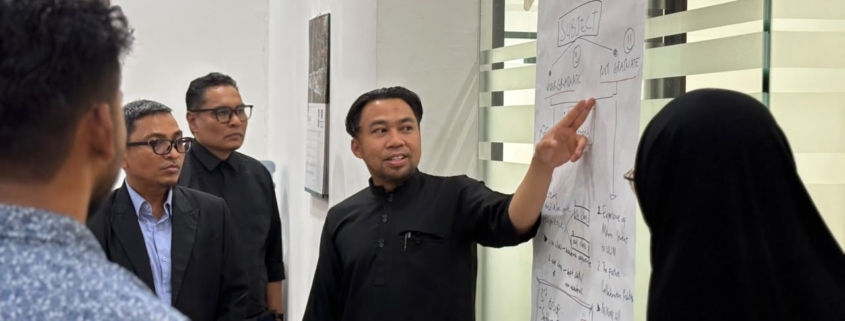
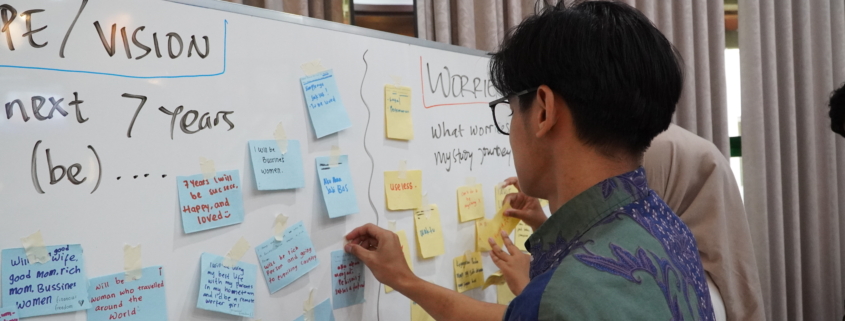
Zaki also introduced the “Studi, Kopi, Hati” concept to the students. Through a simple activity, students were asked to write their vision for the next seven years on a blue card and their biggest worries about their study journey on a yellow card. The activity encouraged students to think about both their aspirations and concerns as they began university life.
He also reminded students about their academic responsibilities, including becoming familiar with the Communication Department’s website, understanding the curriculum, managing course registration, and communicating with their academic advisors. Rather than being overwhelmed by the number of courses and credits, students were encouraged to approach their studies step by step.
Beyond academics, Zaki encouraged students to become more explorative. He used coffee as a symbol of exploration, explaining that students could bring their personal interests into their university experience. For example, hobbies such as comics, photography, traveling, or other interests could become part of students’ academic or creative projects.
For Zaki, exploration could also happen outside the classroom. He shared his own experiences of combining travel, research, and personal interests. His examples showed students that learning could take place through direct experiences, including traveling to new places, studying local issues, meeting people, and observing their surroundings.
The first session then continued with Dr. Dian Sari Utami, who discussed the psychological and personal challenges students may face when entering university. She highlighted several changes that distinguish university life from high school, including greater independence, increased responsibility, academic complexity, social diversity, time and energy management, decision-making, and relationship building.
Dian emphasized that university students need to take responsibility for their own decisions and actions. She also encouraged students to embrace differences in cultural backgrounds, values, languages, beliefs, communication styles, and perspectives.
ACSS Orientation 2026 Encourages New IPC Students to Build Character and Meaningful Connections
One of the important skills discussed during the session was psychological resilience. Dian compared resilience to a tennis ball. When a tennis ball is thrown, it can bounce back rather than break. Similarly, students need to develop the ability to recover when facing challenges, setbacks, stressful situations, or unexpected changes.
She also discussed the importance of supportive relationships and effective coping strategies. Students were encouraged to identify people and activities that could provide healthy support when they experienced stress. In addition, Dian introduced adaptive thinking, self-regulation, intercultural openness, communication skills, and a global mindset as important abilities for university students.
The second session was delivered by Ida Nuraini Dewi Kodrat Ningsih. She encouraged students to build their university journey around five main ideas: head, heart, habit, human, and hustle smart.
Ida reminded students not to simply follow the achievements or popularity of other students. Instead, they were encouraged to understand their own goals and ask what they could contribute as IPC students.
She emphasized the importance of asking, “What can I do as an IPC student?” rather than continuously asking what IPC could provide for them. According to Ida, students should take an active role in their university experience by contributing, participating, and creating opportunities for themselves.
The session also encouraged students to understand their personal “why.” After identifying what they want to become, students were asked to consider why they wanted to achieve those goals. Understanding this reason, Ida explained, could help students identify the effort and steps needed to achieve their aspirations.
Building networks was another important point. Students were encouraged to connect with lecturers, seniors, classmates, and members of the wider IPC community. These relationships could become valuable networks for future academic, professional, and personal opportunities.
Finally, Ida introduced the idea of “hustle smart,” which focused on making progress through small but consistent actions rather than expecting an immediate transformation. Students were encouraged to understand their own abilities, build positive relationships, maintain discipline, and gradually develop themselves.
Through ACSS Orientation 2026, new IPC students were introduced not only to academic requirements but also to the broader experience of becoming university students. The sessions encouraged them to develop resilience, independence, communication skills, global awareness, personal vision, and meaningful relationships.
As they begin their journey at UII, the students were reminded that university is more than completing courses and earning a degree. It is also a period of exploration, contribution, and personal formation where students have the opportunity to decide what kind of person they want to become.
Written by: Muhammad Prima Sakti Fathurrahman
Edited by: Meigitaria Sanita